The Ticket Home I Never Used: An Immigrant's Journey of Resilience and Giving Back
From landing in America with two suitcases, to building a career, a family, and a life of service, Dr. Milind Sohoni reflects on resilience, family sacrifices, unexpected setbacks, and why true success is measured by the difference we make in the lives of others.


Editor’s Note: When I first interviewed Dr. Milind Sohoni, I was struck not simply by what he had accomplished, but by the journey that brought him from Bombay to Minnesota. Behind every public servant is a personal story, and Milind's is one of resilience, family, unexpected turns, setbacks, gratitude, and giving back. His service to the Wayzata community is one chapter of that much larger journey. What follows is an abridged excerpt from his forthcoming memoir, The Ticket Home I Never Used, which we invited him to share with the community.
— Ketan Kakkad, Publisher
The Ticket Home I Never Used©
An Immigrant's Journey of Resilience, Gratitude, and Giving Back
By Dr. Milind Sohoni
The Moment That Changed My Life
There was a time when my own father wondered if I had a future.
Growing up in Bombay, India, I was fortunate to be raised in a family where education was valued above almost everything else. My father was an engineer who built a successful career through hard work, discipline, and perseverance. My mother belonged to a generation when many women did not have the same educational opportunities, but she possessed something equally valuable: compassion, kindness, and an instinct to care for others.
Those two values—achievement and empathy—became the foundation of my life.
However, as a young student, I did not always live up to my potential.
During my second year of college, I fell into the wrong group of friends and lost focus on my studies. My academic performance suffered. I still remember overhearing my father tell my mother that he no longer believed I had a future.
Those words were painful.
But sometimes the most difficult moments in our lives become the moments that define us.
I decided that I would prove to myself—and to my father—that I was capable of more. I changed my priorities, worked harder, and eventually graduated at the top of my class.
That experience taught me one of the most important lessons of my life:
A setback does not define us. How we respond to it does.
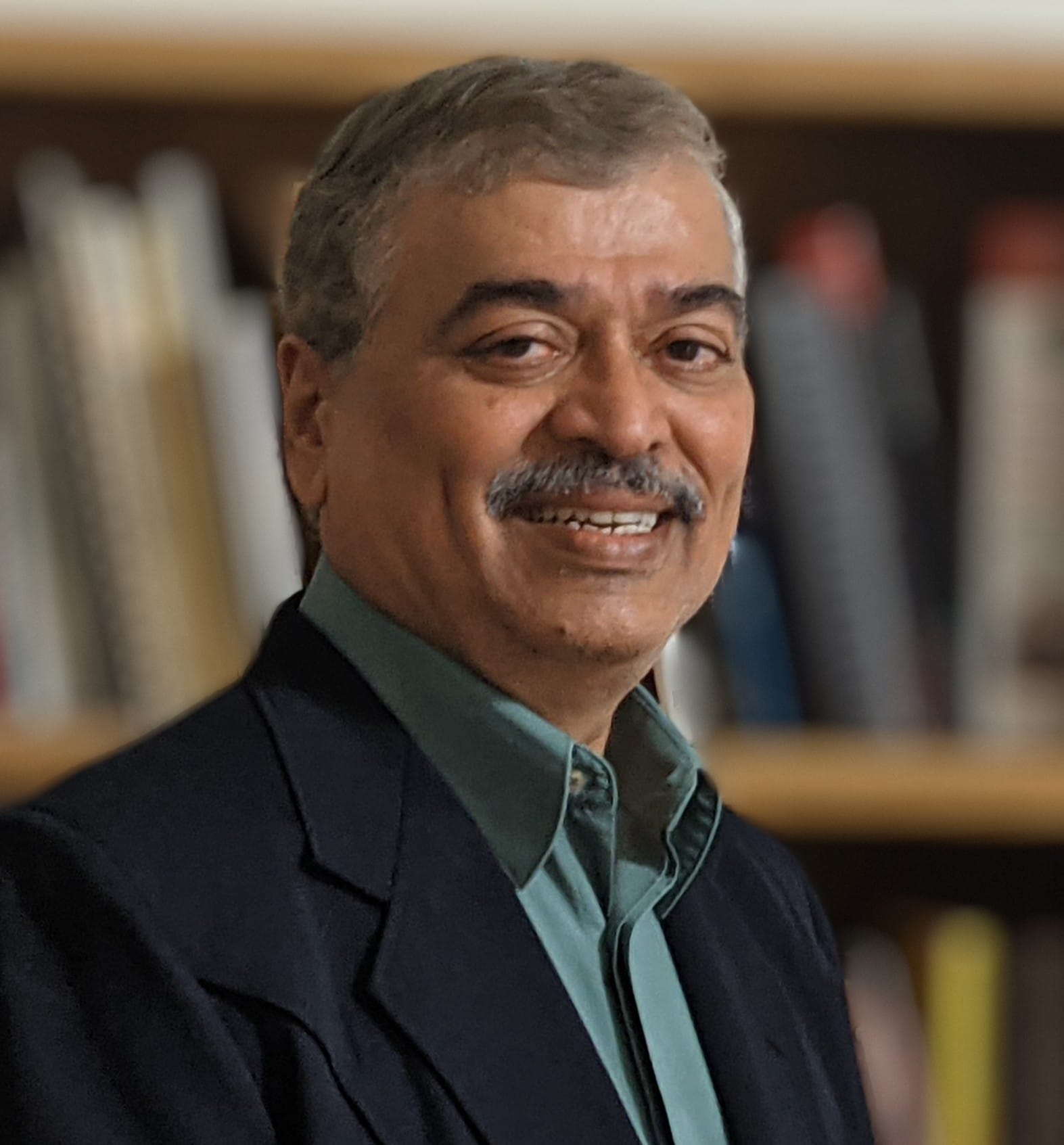
A Journey That Began With a Chance
My journey to America was not driven by a lifelong dream of immigrating. It began much more simply.
Several of my friends were applying to graduate schools in the United States. They encouraged me to apply as well. I prepared for the GRE and TOEFL examinations, submitted applications, and waited.
I was accepted into the University of Cincinnati's Ph.D. program in Chemistry with a full scholarship.
I left India with two suitcases, a few hundred dollars, uncertainty about the future, and a tremendous opportunity.
Before leaving, I completed my Master's degree in Textile Chemistry from one of the finest institutions in Asia. Education had always been my path forward, and America offered an opportunity to continue that journey.
When I arrived in the United States, I was excited but overwhelmed. It was my first time away from my family and friends. Everything felt different—the culture, the weather, the pace of life, and even the way people interacted.
I still remember landing at JFK Airport in New York. A friend of my father met me before my connecting flight and offered some advice about America that I have never forgotten.
He said: "Remember, even the air you breathe in America has calories."
At first, I laughed. But over time, I realized there was truth behind what he said. Keeping my weight under control, even with strict diets and exercise, has been one of the hardest things for me.
Learning to Belong
One of my first surprises after arriving in Cincinnati was being asked to take another English examination—the Michigan Test—even though I had already successfully completed the TOEFL.
I remember feeling that the test underestimated my ability with English. I had attended a convent school in India where English was the language of instruction, and I had studied the language for thirteen years.
Yet I also saw graduate students from countries where English was not commonly spoken struggle with the test and take remedial English classes.
My challenge was not that I did not know English.
My challenge was adjusting to a different version of English.
Initially, I sometimes had to listen very carefully, and watch their lips, to understand professors and classmates. Over time, I adapted. More importantly, I learned that communication is not only about speaking clearly—it is about listening carefully and respecting differences.
During my years owning a retail business, customers occasionally told me that I spoke English very well or that they loved my accent.
I understood many meant it as a compliment. But sometimes I wondered what they really meant.
I would respond with humor:
"I love your accent too."
They would often look surprised.
"I don't have an accent," they would say.
That gave me the opportunity to explain that we all have accents. I speak with an Indian accent. They speak with an American accent.
An accent is not a deficiency. It is a reminder of where our journey began.
The same is true of names. My name, Milind, carries my heritage and my family's history. Over the years, I have encountered many pronunciations of my name. Most were honest attempts by people unfamiliar with it.
I have learned that making the effort to pronounce someone's name correctly is one of the simplest ways of showing respect. A name represents identity, family, and belonging.
Becoming American did not require me to give up who I was. It required me to bring the best of my background and contribute it to the community that had welcomed me.
The Ticket Home
Despite all the opportunities America provided, my early years were difficult.
I had to learn how to live independently—cooking, cleaning, managing finances, and succeeding academically while being thousands of miles away from home.
The loneliness became overwhelming.
One day, I called my father, and cried. I told him I wanted to come home. I asked him to buy me a ticket back to India.
My father listened.
Then he said something that changed my life.
He told me that if I truly wanted to return, he would not stop me. But he also told me that I should not return until I had earned the Ph.D. I came to America to pursue.
It was not a command.
It was a challenge.
At that moment, I realized I had a choice. I could take the easier path and leave, or I could persevere.
That ticket home was never purchased.
And because I never purchased it, America became my home.
Building a Career and a Family
I was incredibly fortunate to receive a full scholarship and a monthly stipend during my graduate studies. Many international students were not as fortunate. They worked long hours while pursuing demanding academic programs.
My scholarship gave me stability.
Within a few months, I was able to save enough money to buy a used car. It was not a great car, but it represented independence. More importantly, it allowed me to help friends who needed transportation.
After completing my Ph.D. in Chemistry from the University of Cincinnati, I became a Post Doctoral Research Fellow at Carnegie Mellon University in Pittsburgh.
That was followed by a career in Research and Development, where I spent approximately ten years conducting research and publishing some of my work.
Later, I earned an MBA while working full time and transitioned into the business side of my profession.
During this period, I also began building my family.
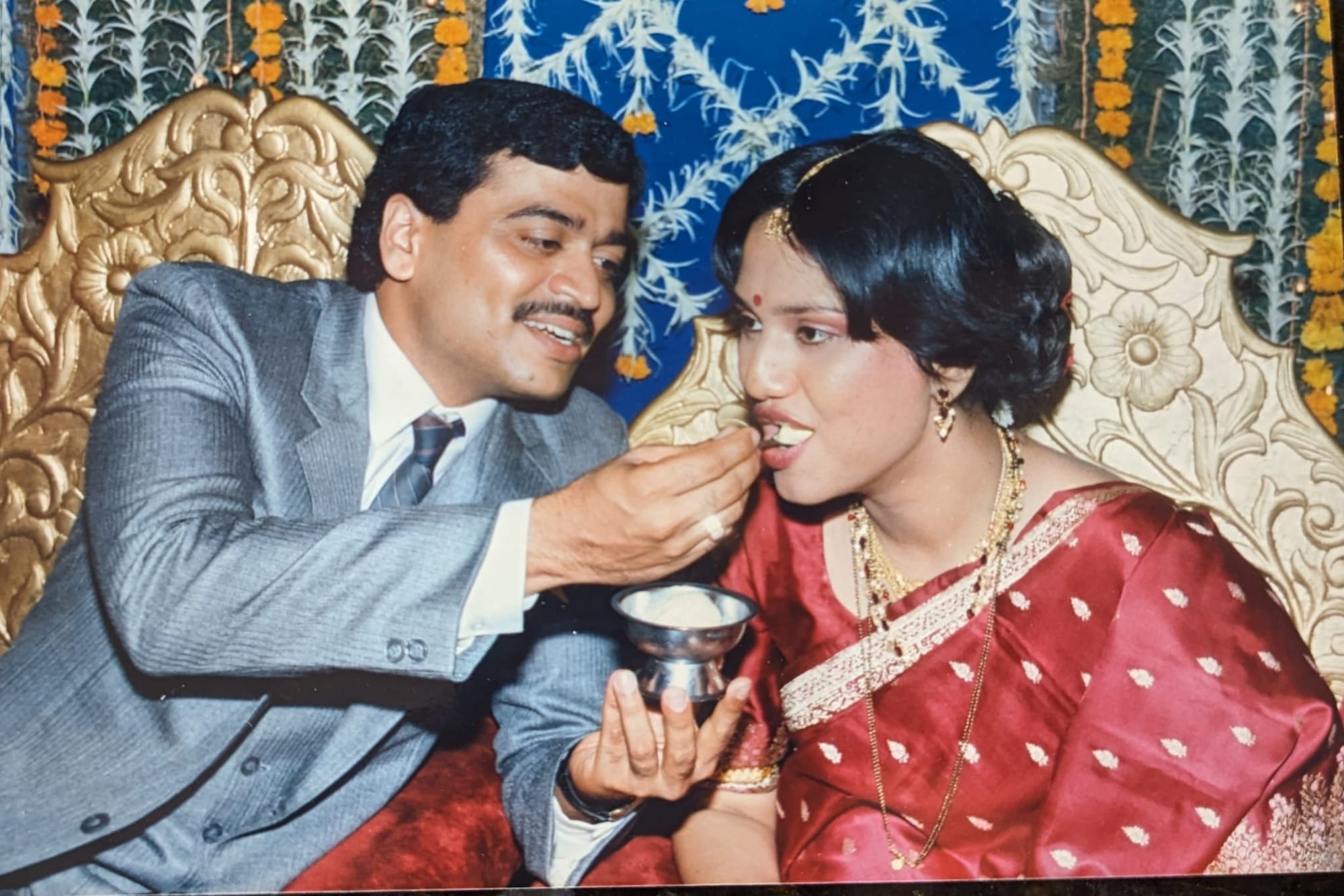
I married my wife, Amita, through a traditional Indian arranged marriage while I was still a doctoral student. Many Americans find it difficult to understand that we married within two weeks of meeting for the first time.
Nearly forty years later, I can say with confidence that it was one of the best decisions of my life.
Amita has been my greatest partner and my strongest supporter. I tend to wear my emotions on my sleeve; she is the steady influence who helps me see situations with clarity.
When we were expecting our first child, Aneesh, I accepted a Post Doctoral Fellowship at Carnegie Mellon University, Amita made the difficult decision to put aside her own dream of pursuing a Ph.D. in Biochemistry.
Later, when our daughter Meghna was young, Amita chose to stay home and care for our children, until Meghna started school.
During that period, I was working full time and pursuing an evening MBA. I often left home before Meghna woke up and returned after she had gone to bed.
She still remembers those years when we missed opportunities to bond.
That remained one of my regrets, until life gave me another opportunity to bond with her later when I was unemployed.
But it also reminds me of the sacrifices families make as they pursue their goals.
Through every transition—the move to America, the demands of graduate school, raising our children, my career changes, my layoff, my business, and eventually my public service—Amita has been beside me. Whatever I have accomplished, I know that I did not accomplish it alone.
When One Door Closed, Another Opened
After years in corporate America, I experienced one of the most difficult periods of my professional life.
In 2001, I was laid off from a comfortable position during a challenging economic period. The country was already facing uncertainty, and the events of September 11 occurred shortly after my job loss.
What I thought would be a brief interruption in my career became an eighteen-month search for employment. I sent hundreds of résumés, made countless phone calls, and came close to receiving job offers several times, only to have each opportunity slip away. Friends tried to comfort me by saying the unemployment rate was low, and I would land soon. For someone who is unemployed, the unemployment rate is not a statistic—it feels like 100 percent. This was especially difficult because I had a family to support.
Fortunately, Amita had entered the workforce by then, which provided our family with stability. Her income helped, and perhaps even more importantly, her employer-provided health insurance gave us security during a very uncertain time.During those eighteen months, I also decided to pursue something completely different. Ever since I was young, I had been fascinated by stand-up comedy. Bob Hope had always been one of my heroes—not only because he made people laugh, but because he brought joy during difficult times. I enrolled in a stand-up comedy class taught by the well-known Minneapolis comedian Stevie Ray. I performed at a few open mics and community events, discovering both the exhilaration and the vulnerability of trying to make strangers laugh. Once I started my business, life became too busy to continue performing, but I have always cherished that brief chapter. It reminded me that even during life's most difficult seasons, we should never stop learning or exploring new passions.
After many months of searching, I realized that perhaps I needed to create my own opportunity.
Around that time, I attended a job transition group and happened to meet someone who was facing a similar situation. He had also been laid off and had decided to purchase a franchise. He encouraged me to consider business ownership.
Once again, life intervened in an unexpected way.
I had almost decided to purchase one particular franchise. I was scheduled to meet with an existing franchise owner, but I got stuck in traffic and missed the appointment.
Rather than simply going home, I stopped at another type of franchise location nearby.
That unexpected stop eventually led me to purchase this different franchise.
After overcoming many challenges, I successfully owned and operated that business for sixteen years.
Looking back, I often wonder what would have happened if I had not been laid off, or if I had not missed that appointment because of traffic.
At the time, those moments felt like failures.
In hindsight, they were blessings in disguise.
Lessons From Owning a Business
Owning a small business taught me lessons that no classroom could have provided.
It taught me humility.
It taught me patience.
Most importantly, it taught me the importance of treating every person with respect.
The vast majority of my customers were wonderful. They supported my business, trusted me, and became part of my extended community.
However, like many immigrants, I occasionally encountered moments that reminded me that acceptance is not universal.
Some customers would comment on my accent or express surprise that I spoke English well. I usually responded with humor and used those moments as opportunities to explain that everyone has an accent.
But there were also more painful moments.
On rare occasions, when customers became angry during disagreements, frustration turned into something deeper. A few times, customers who were upset about not getting the price they wanted became disrespectful. While leaving the store, they would turn around at the door and tell me to go back to my country.
Those moments hurt.
Not because I questioned whether America was my home.
It was.
But, because they revealed that some people still struggled to accept that someone who looked different could also be an American business owner, neighbor, and community member.
Over time, I learned that those words reflected the person saying them more than they reflected me.
My response was not anger.
My response was to continue contributing, continue serving my customers, and continue building relationships.
Challenges That Strengthened Me
In 2008, I faced another unexpected challenge.
Because of severe nearsightedness, called myopia, that I had lived with since childhood, I experienced a retinal tear in one eye. The surgery required removing my natural lens so the retina specialist could treat the damage and clean the eye.
Unfortunately, the surgery was not successful.
Today, that eye has approximately 20:400 vision, which can potentially be improved with a lens implant, but the vision would still be severely affected.
At first, I was devastated.
One of my biggest concerns was whether I would be able to continue driving. Losing independence is a frightening thought.
Fortunately, I learned that Minnesota allows individuals who are blind in one eye to drive if their other eye meets the necessary requirements. I also realized that my affected eye still provided some peripheral vision and helped with depth perception.
What initially seemed catastrophic became something I learned to live with.
That experience gave me another important lesson: do not focus only on what you have lost.
Focus on what you still have.
I am grateful every day that I have one good eye. There are many people who have never experienced sight or who have lost it completely. Compared to them, I remain incredibly fortunate.
Family Legacy
Amita and I have always believed that success is not measured only by achievements. It is measured by the values we pass on.
We wanted our children to grow up understanding the importance of education, hard work, compassion, and service.
Both of our children attended Wayzata Public Schools from kindergarten through graduation. We feel fortunate to have raised them in a community that values education.
But more importantly, we are proud of the people they have become.
Aneesh and Meghna have chosen paths that allow them to serve students and
communities that need greater opportunity.
That is our greatest joy as parents.
Like many children of immigrants, our children also experienced moments when they felt different. During their school years, they encountered occasional comments from classmates that reflected ignorance rather than understanding. Being called names such as "brownies" was hurtful.
But those experiences strengthened something we had always hoped to instill in them: empathy.
We wanted them to understand that differences among people should not divide us. They should help us understand one another better.
Watching our children choose careers centered on service has been one of the greatest blessings of our lives.
Their accomplishments make us proud, but what makes us prouder is their commitment to helping others.
They inspire me every day in my own public service.
Finding Purpose Through Service
After sixteen years of owning my business, I decided to retire early.
For many years, I had wanted to become more involved in community service, but work and family responsibilities limited my ability to do so.
Retirement gave me that opportunity.
I ran for city council and lost by the narrowest of margins.
It was heartbreaking.
I had worked extremely hard, and I questioned whether public service was meant for me.
That period was made even more difficult because it occurred during COVID, when I also lost a dear childhood friend, my mother-in-law, and my uncle who had provided tremendous support during my transition into school in Bombay.
It was a challenging season of life.
But once again, my family and friends reminded me that failure is not the end of the journey.
Sometimes it redirects us.
The following year, I ran for the Wayzata School Board.
I was elected.
A Responsibility to Serve
Serving on the school board has been one of the greatest honors of my life.
When people ask me who my boss is, I always give the same answer:
The community is my boss.
I serve at the pleasure of the people who elected me.
After serving on the board for two years, I was honored to be elected Board Chair. During my tenure as Chair, our board accomplished several important milestones, including successfully completing a superintendent search and leading a major bond referendum that was approved by voters.
These achievements were not the work of one person. They were the result of collaboration among board members, district leadership, educators, staff, families, and community members.
Leadership is not about receiving credit.
It is about creating an environment where people can work together toward a common purpose.
I have tried to lead with the values I campaigned on:
- trust,
- inclusion,
- transparency,
- and accountability.
Beyond Wayzata, I have also been honored to serve on the Minnesota School Boards Association (MSBA) Board and contribute to conversations about public education across Minnesota. At the national level, I serve as an Advisor to the Unified Boards Alliance of the Consortium of State School Boards Association (COSSBA), an organization whose membership comprises of State School Board Associations.
I am also mindful of the significance of bringing a perspective and background that have historically been underrepresented in these spaces.
But titles are not what matter most.
Service is.
The Meaning of Home
When I first arrived in America, I was a young graduate student who was uncertain about the future.
I did not know where life would take me.
I did not know that I would build a career, raise a family, own a business, or eventually devote myself to public service.
I certainly did not know that America would become home.
My journey has taught me that success is not a straight line.
It is filled with setbacks, unexpected turns, moments of doubt, and opportunities that appear when we least expect them.
My parents gave me the foundation.
My wife gave me strength.
My children gave me inspiration.
And America gave me the opportunity to contribute.
Albert Einstein once said:
"Only a life lived for others is a life worthwhile."
Those words capture what I believe today.
The greatest rewards in life are not degrees, titles, or positions.
They are the relationships we build, the people we help, and the difference we make in the lives of others.
There was a time when I almost purchased a ticket home.
I am glad I never did!
Instead, I found a home, a family, and a purpose I could never have imagined.
 The Newsroom at PlymouthMN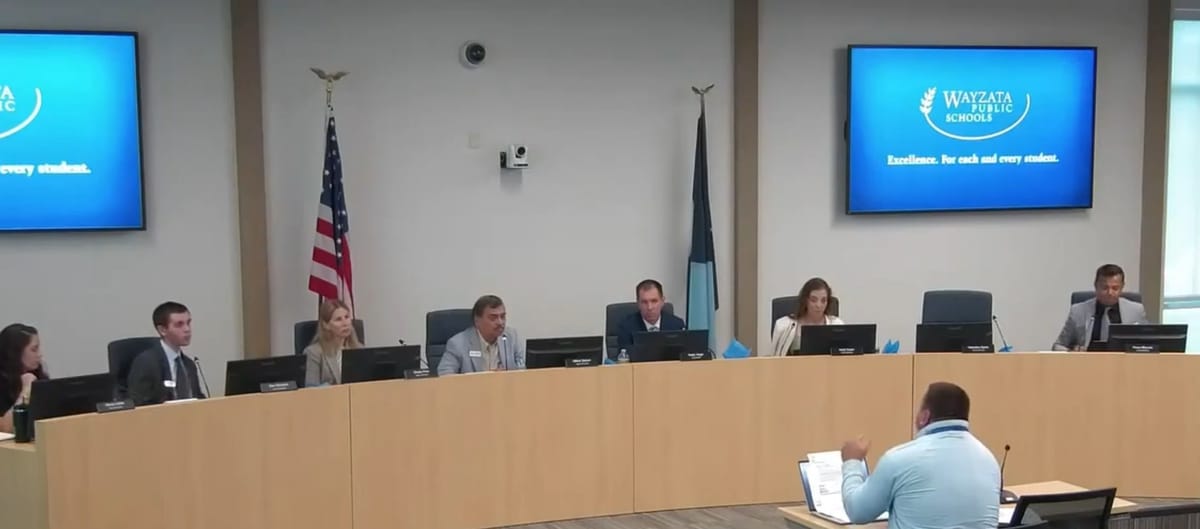
In an exclusive Q&A with PlymouthMN, School Board Chair Dr. Milind Sohoni shares why the board chose Dr. Virgin, the top three strategic priorities for the upcoming school year, and how his own journey as an immigrant shapes his vision for public education.
 The Newsroom at PlymouthMN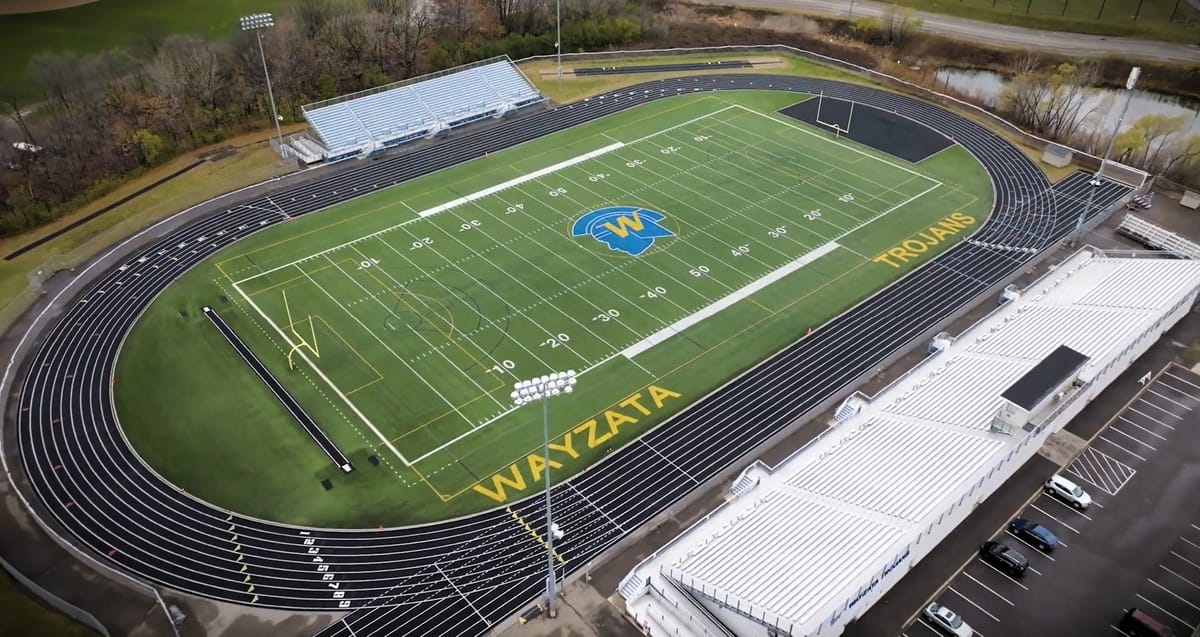
Wayzata Public Schools (ISD 284) has been officially ranked the #1 Best School District in Minnesota for 2024, 2025, and 2026. For families migrating to the West Metro, the "where to live" decision is almost exclusively driven by this single factor.
Feature image credit: Dariusz Sankowski on Unsplash


