From Plymouth to the Pentagon: The Local Reality Behind the National Cyberattack Headlines
Plymouth’s water communications have been restored following a cyberattack that has now made national headlines. Here is the local reality behind the leaked federal memos, foreign hackers, and geopolitical noise.


The Bottom Line: Plymouth’s automated water communications have been fully restored. Water quality was never compromised, and the local focus remains on operations, even as the incident sparks a national geopolitical debate.
If you’ve glanced at national news outlets or scrolled through community forums over the past 48 hours, you’ve likely seen the headlines: foreign hackers, leaked federal memos, and a political firestorm centering right here in Minnesota.
The regional cyberattack we reported on earlier this week—which targeted municipal water infrastructure across the state—has rapidly escalated into a national news cycle. But amidst the conspiracy theories and political finger-pointing, what does this actually mean for Plymouth residents?
Here is the breakdown of the local reality versus the national noise.
The Local Status: Systems Restored
While national media focuses on the geopolitical drama, local officials have remained focused on operations.
According to the latest update from the City of Plymouth, crews successfully reestablished communications connections to all impacted water towers and lift stations by Tuesday afternoon. The system was closely monitored and has since returned to normal automated operations.
Crucially, the city reiterated that Plymouth did not experience any impact to water levels or quality during the outage. Public Works crews seamlessly managed the system through manual procedures while the cellular communications layer was offline. The Plymouth Public Safety Department is currently working with law enforcement and cyber-investigation agencies to share data on the breach.
The National Escalation: The Leaked Memo
The reason Plymouth and neighboring cities are suddenly in the national spotlight comes down to a leaked federal document.
Reporting from Wired and other national outlets revealed a joint memo from the Water Information Sharing and Analysis Center (WaterISAC) and the Minnesota Fusion Center. The memo suspects that Iranian-affiliated actors were behind the dragnet attack that hit over 30 Minnesota municipalities.
When residents hear "foreign hackers," the immediate assumption is a targeted, movie-style cyber warfare campaign against Plymouth. The reality is much more mundane, though equally serious.
As we noted in our original reporting, these incidents are rarely targeted attacks singling out a specific city's grid. They are automated, global dragnets. Hackers deploy bots to scan the entire internet looking for specific vulnerabilities—in this case, cellular modems and Programmable Logic Controllers (PLCs) used in industrial infrastructure.
Federal agencies, including the Cybersecurity and Infrastructure Security Agency (CISA), issued urgent warnings about these exact vulnerabilities just days prior. Plymouth wasn't singled out for its political importance; its equipment simply tripped a wire in a global, automated scan.
Q: Can you rule out that Iran is behind the water attacks? TRUMP: I don't think so. I think that Minnesota is behind it. You know who is behind it? Minnesota. Because they're grossly incompetent. I don't think there was an Iranian cyberattack. I think Minnesota ought to get its act together.
— Aaron Rupar (@atrupar.com) July 31, 2026 at 11:29 AM
[image or embed]
Deconstructing the Online Blame Game & "Shadow OT"
When national headlines mention "foreign hackers," the immediate reaction on local social media is to point fingers. The debate usually boils down to two deeply polarized viewpoints:
- The "Gross Negligence" Narrative: Critics use the CISA memo as a weapon, arguing that because a federal warning was issued days prior, any successful breach represents complete incompetence by local officials.
- The "Sovereign Vulnerability" Narrative: Defenders point out that municipal water infrastructure is a patchwork of aging legacy systems and Industrial IoT components. They argue that expecting a local utility budget to perfectly defend against foreign state-sponsored cyber actors is an impossible standard.
The systemic breakdown happening across the country comes down to the reality of Operational Technology (OT). A cellular modem might have been installed at a lift station a decade ago by an outside contractor just to read a pump meter remotely. Even if a city discovers an outdated controller, fixing it frequently requires ripping out and replacing legacy hardware—a process that costs hundreds of thousands of dollars and requires shutting down the local water supply.
The Social Media Amplification: Once national commentators and unfiltered social media accounts find the story, they ignore the local details. They rarely look at the fact that it was a wide-net automated strike affecting dozens of communities. Instead, they use the event to fuel pre-existing political arguments.
Stay in the loop on Plymouth and the west metro
Get plain-English updates on local issues, community stories, and events that matter.
⚡Delivering Noise-free Hyperlocal News Experience
Join us in our journey!A Publisher’s Perspective: The Translation Gap
This incident highlights a massive disconnect between federal intelligence and local execution. PlymouthMN.com Publisher Ketan Kakkad, who brings over three decades of experience leading enterprise technology organizations, explains the reality of the situation:
"On Monday, instead of rushing to publish shallow details based on the initial incident reports spotted by our engine, I spent hours researching the specifics and mapping the federal CISA memo to the reality of municipal infrastructure before publishing "Coordinated Cyberattack Targets Plymouth and Statewide Municipal Water Systems" article.
Having spent 30+ years in enterprise tech, I can confidently state that expecting a local public works employee—whose primary expertise is water pressure and quality—to read through thousands of words of dense, military-grade jargon and map them to legacy hardware is completely unrealistic.
Federal agencies issue highly complex warnings, but there is a massive 'translation gap' before those warnings become simple, actionable instructions for local towns. In the meantime, foreign actors don't sit down and actively target Plymouth; they use automated botnets to scan the entire public internet. If a city’s legacy cellular modem happens to ping on that scan, the botnet automatically attacks it. Local utilities are essentially fighting an automated, global war without a dedicated cyber-army."
- Ketan Kakkad, Publisher, PlymouthMN.com
Ultimately, the Plymouth case has become a textbook example of how critical infrastructure is caught between aging physical machinery and highly sophisticated digital threats.
This is exactly why Plymouth’s manual fail-safes working as intended this week is the real story.
(Update) Expanded Context: The Real Operational Dangers
As the federal investigation continues, data provided by the FBI and EPA confirms the massive scale of this incident. The dragnet scan did not just hit Minnesota; utilities in at least seven states were compromised by the same automated botnet over the weekend. Crucially, the EPA's 2024 report noted that 70% of inspected water utilities nationwide were in violation of basic federal cybersecurity standards prior to this multi-state breach.
While the political debate continues on social media, the physical threats to these legacy systems are stark. When hackers exploit internet-connected controllers (PLCs), the real-world consequences go far beyond a digital headache:
- Device Lockouts: This may lead to device lockout situations where hackers break into vulnerable devices, and immediately change the IP addresses and passwords.
- Loss of Remote Control: Device lockouts would force critical water facilities to fly blind, causing communication blackouts with remote wells and water towers.
- Physical Cascades: These operational failures may lead to localized pressure losses, system flooding, and subsequent boil-water advisories.
- Contamination Risks: While drinking water has generally remained safe, experts warn that severe pressure drops in the grid can allow untreated groundwater or outside contaminants to seep backward into clean distribution pipes.
Ultimately, these recent incidents highlights a nationwide infrastructure gap: a digital vulnerability that has the potential to instantly trigger a physical public health crisis.
 The Newsroom at PlymouthMN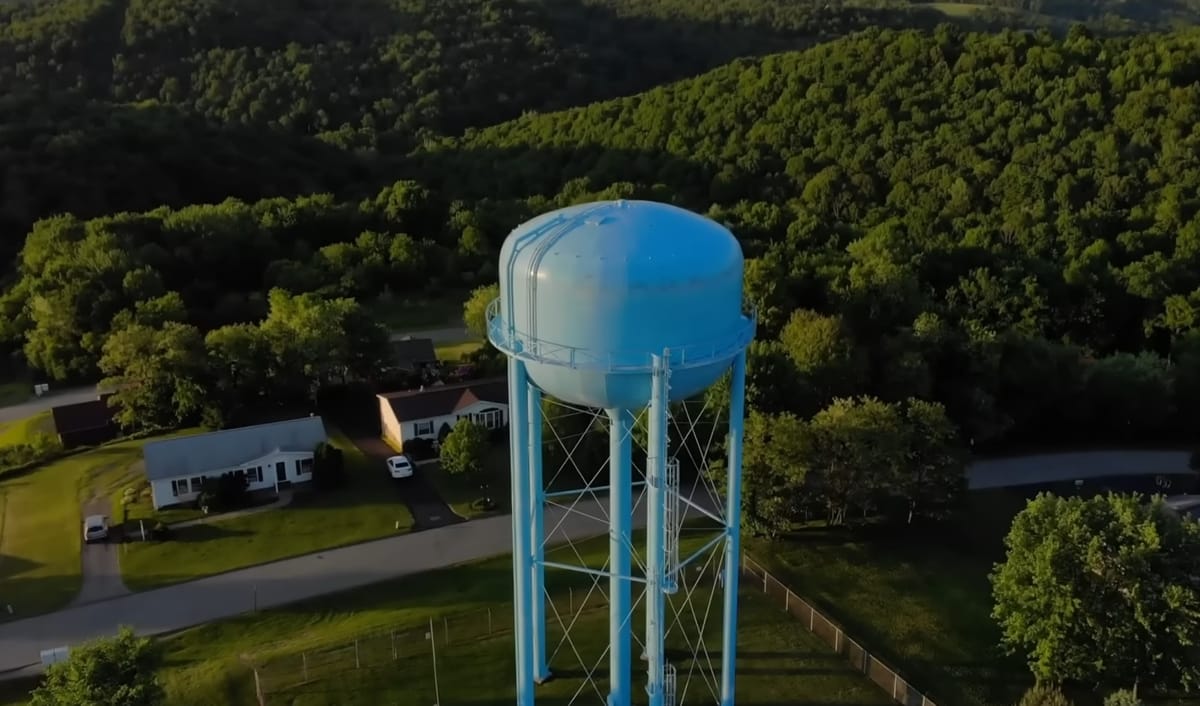
Sources:
- Communications restored at Plymouth water facilities
- A Leaked Memo Ties Cyberattacks on Minnesota Water Utilities to Iran
- Walz blasts unfounded Trump claim on cyberattacks
- WaterISAC - Shared Information. Stronger Water Security.
- Minnesota Fusion Center (MNFC)
- U.S. says cyberattacks against water supplies are rising and utilities need to do more to stop them


